In this lesson:
- How a healthy batch looks, smells and feels
- How to diagnose a bad smell or slime
- The most common causes, and how to prevent them
- Why you never cook a bad batch to rescue it
The golden rule
If a batch smells wrong or feels slimy, throw it out. Seed costs pennies. Don't try to fix, rinse or cook your way out of a bad batch.
What healthy looks like
| Healthy sprouts | |
|---|---|
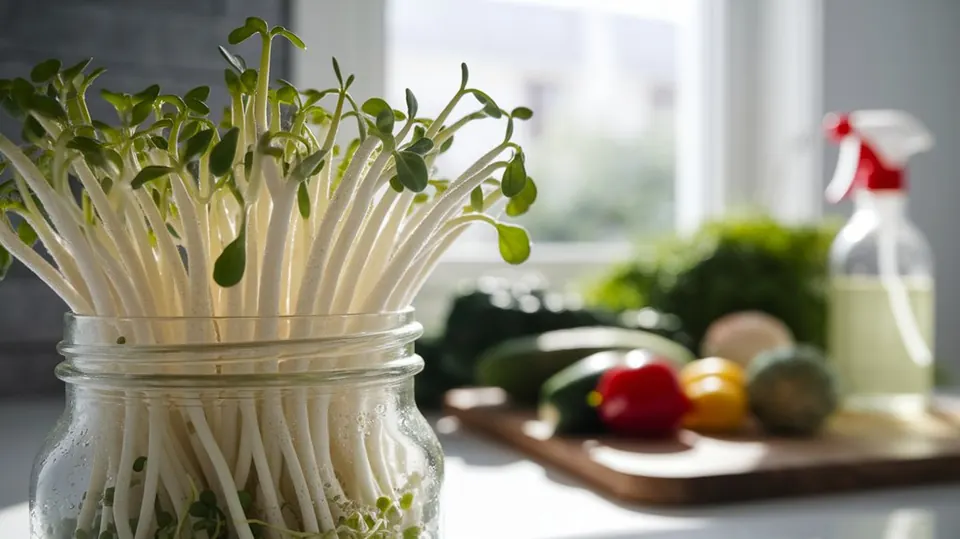
| Look | Crisp, bright white or pale yellow tails. Small green leaves on leafy sprouts. |
| Smell | Clean, fresh, a little earthy or grassy. Bean sprouts can smell lightly "beany". |
| Feel | Damp but not slippery. Crisp. |
Get into the habit of sniffing the jar at every rinse. After a few batches, you'll know what normal smells like, and bad smells will stand out immediately.
Troubleshooting guide
Problem: sour or vinegar-like smell
What it means: Fermentation or early spoilage.
Common causes:
- Soaked too long, especially in a warm kitchen
- Poor draining, so water sat at the bottom
- Too much seed, so the jar was packed
- Not rinsing often enough
- Temperature above 80°F (27°C)
What to do:
- Rinse the sprouts thoroughly in a bowl of cool water.
- Sniff again after rinsing.
- If the sour smell is gone, the sprouts look and feel normal, and it's early in the batch, you can carry on. Use less seed, drain better and rinse more.
- If the smell stays or returns, throw the batch out.
If you're not sure, throw it out.
Problem: rotten or sulfur smell (like eggs)
What it means: Spoilage bacteria have taken over.
What to do: Throw the whole batch away. Don't rinse. Wash the jar and lid in hot soapy water.
Problem: musty or basement smell
What it means: Mold or stale seed.
What to do: Check for mold (Lesson 9). Throw the batch away if you see any. If the seed itself smells musty in the bag, replace it.
Problem: slimy or sticky sprouts
What it means: Bacteria growing in a film, nearly always from standing water.
What to do: Throw it out. Do not cook it. Wash the jar and lid thoroughly.
A note on natural gel: some seeds, such as chia, flax, basil, cress and arugula, release a clear gel when wet. That is normal for those seeds and it's why they aren't sprouted in jars. If you're sprouting lentils, mung beans, broccoli, radish or alfalfa and they feel slimy, it isn't the seed. It's bacteria.
Problem: mushy, brown or translucent stems
What it means: Rotting from age, heat or overwatering.
What to do: Throw the batch out if it also smells or feels slimy. If it's only dark tips on a mature batch, harvest immediately and use the sprouts that are still crisp.
Problem: bubbly or foamy soak water
What it means: Fermentation, usually from soaking too long or in a warm place.
What to do: Drain, rinse well, sniff. If the smell is mild and sprouts look healthy, you can carry on, but shorten the soak next time. If it smells sour, throw it out.
Why batches go bad
Almost every bad batch comes from one or more of these.
| Cause | How to avoid it |
|---|---|
| Too much seed | Measure. Use the amounts in Lesson 2 |
| Poor draining | Tilt the jar and tap out the last drops, every time |
| Too warm | Keep at 65–75°F (18–24°C). Add a rinse above 80°F (27°C) |
| Not enough rinsing | Rinse every morning and evening |
| Dirty jar or lid | Wash in hot soapy water before every batch |
| Old or dead seed | Test germination (Lesson 3) |
| Soaking too long | Follow the soak times in this course |
The "rinse-and-sniff" test
When you aren't sure:
- Pour the sprouts into a clean bowl of cool water.
- Swirl and lift them out into a clean strainer.
- Smell them.
- Look at them against a white towel or plate.
Clean smell, bright colour, firm feel: carry on. Anything else: throw it out.
Why cooking doesn't rescue a bad batch
Heat kills many bacteria, but it doesn't remove the by-products of spoilage, and you can't see or smell which bacteria are present. A slimy, sour batch has already had days of bacterial growth. Cooking it hides the problem but doesn't fix it.
How to dispose and restart
- Throw the batch in the trash or compost.
- Wash the jar and lid in hot, soapy water. Run them through a hot dishwasher cycle if you can.
- Replace cheesecloth.
- Wash your hands.
- Start a new batch with fresh seed. Use less seed this time.
Do this now
- Practice the sniff test at your next rinse. Notice what "normal" smells like.
- Write a one-line note for each batch: what you did, what you saw.
- Keep this lesson bookmarked.
Key takeaways
- Healthy sprouts look crisp, smell clean and feel damp but not slimy.
- Sour, rotten, musty or slimy: throw it out.
- Prevent problems with less seed, better draining, cooler temperatures and clean jars.
- Cooking never rescues a spoiled batch.

Written by Michael
A passionate sprouting professional sharing practical tips for growing sprouts and microgreens at home. More about Michael