In this lesson:
- How small-seed sprouting differs from beans
- Soak times, amounts and grow times
- How to "green up" leafy sprouts
- How to deal with seed hulls
- How to eat these sprouts more safely
A note on risk first
Small-seed sprouts like broccoli, radish, alfalfa and clover are usually sold and eaten raw, on sandwiches and in salads. That's exactly the use health agencies warn about. Alfalfa and clover sprouts appear often in outbreak reports.
You can grow them. They're fun, fast and mild. But please read Lesson 4 again before you eat them raw, and never serve them raw to anyone in a higher-risk group. Section "Eating them more safely" below shows how to cook them.
The basics
Small seeds follow the same pattern as beans: soak, rinse, drain, repeat. The differences:
- They need less seed.
- They need less soaking.
- They take longer (4–5 days).
- They can be exposed to light at the end to turn green.
- They're delicate. Rinse gently.
Soak times and amounts
| Seed | Seed per quart jar | Soak | Ready in |
|---|---|---|---|
| Broccoli | 2 tablespoons | 1–4 hours | 4–5 days |
| Radish | 2 tablespoons | 4–12 hours | 4–5 days |
| Alfalfa | 1 tablespoon | 4–12 hours | 4–5 days |
| Clover | 1–2 tablespoons | 4–12 hours | 4–5 days |
Small seeds expand a lot. One tablespoon of alfalfa can fill a quart jar. When in doubt, use less.
Day-by-day
Day 0: soak
- Wash your hands, jar and lid.
- Measure the seed into the jar and rinse once.
- Add 3–4 times as much cool water.
- Soak for the time in the table.
Days 1–3: rinse and drain
- Drain the soak water and throw it out.
- Rinse with cool water. Swirl gently. Drain well.
- Prop the jar at an angle, out of direct sun.
- Repeat morning and evening. Add a third rinse if your kitchen is hot.
Seeds are damp, never sitting in water.
Days 4–5: grow and green
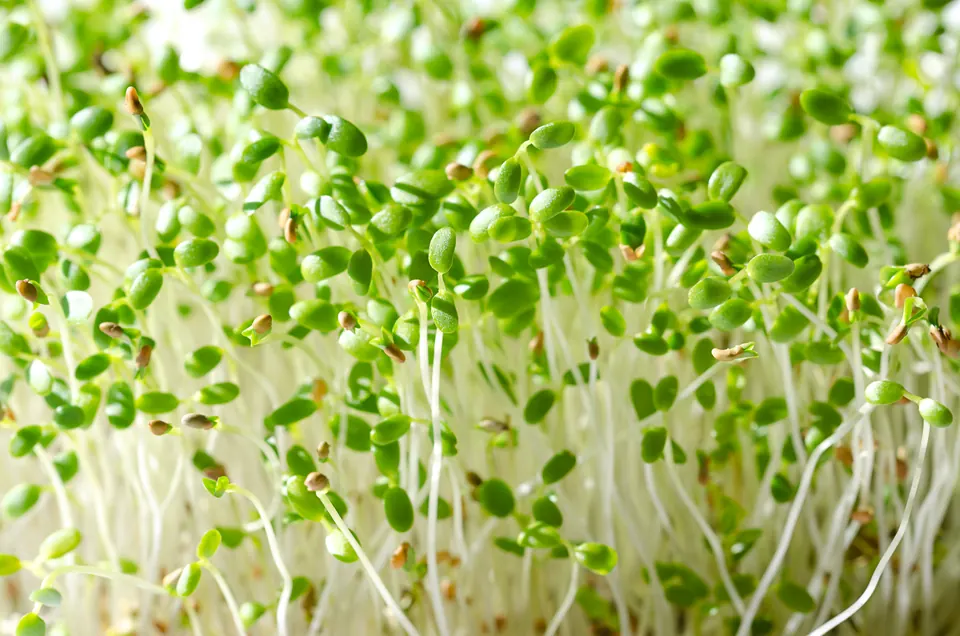
Sprouts get tall and tangled. You'll see tiny yellow leaves (cotyledons) forming.
To turn them green:
- On the last day, move the jar to bright but indirect light for 4–8 hours.
- Keep rinsing as usual.
- Don't put it in direct sun. It overheats the jar.
Greening is optional, and it only helps leafy sprouts. It makes them look better and slightly sweeter.
Dealing with seed hulls
Small seeds drop brown or black hulls as they grow. They're harmless but look messy and trap moisture.
To remove them at harvest:
- Fill a large bowl with cool water.
- Add the sprouts and swish them around.
- Hulls sink or float. Skim or pour them off.
- Lift out the sprouts, and repeat if needed.
Then dry the sprouts well (Lesson 7).
Tips for each seed
Broccoli. Easy and forgiving, and the best small seed to start with. Mild, slightly peppery.
Radish. The fastest. Spicy. Grows tall. Rinse gently so they don't tangle.
Alfalfa. Very fine. Easy to overload the jar. Use only 1 tablespoon.
Clover. Similar to alfalfa. Fine, delicate and mild.
Eating them more safely
You have these choices.
- Cook them. Add broccoli or radish sprouts to a soup, fried rice or omelet for the last few minutes of cooking, so they get steaming hot all the way through. They turn soft and lose their crunch, but keep their flavour.
- Stick to bean sprouts for everyday use and treat small-seed sprouts as an occasional batch.
- If you eat them raw, do it as a healthy adult who understands the risk. Don't serve them to anyone higher risk. Don't put them on food you'll sell or share without cooking.
Common problems with small seeds
| Problem | Cause | Fix |
|---|---|---|
| Matted, hard-to-rinse mass | Too much seed | Use less seed. Gently loosen with water. |
| Sour smell | Poor draining or too warm | See Lesson 8 |
| Fuzz on root tips | Root hairs, usually harmless | See Lesson 9 |
| Little germination | Old seed | Test the seed (Lesson 3) |
| Slimy sprouts | Standing water | Discard (Lesson 8) |
Do this now
- Start a broccoli batch: 2 tablespoons in a clean quart jar.
- Mark the date, and follow the day-by-day steps above.
- Take photos on Days 2, 4 and 5.
Key takeaways
- Small seeds need less seed and more days (4–5).
- Green them with indirect light for 4–8 hours at the end.
- Remove hulls in a bowl of cool water.
- Cook small-seed sprouts when you can, especially for anyone in a higher-risk group.

Written by Michael
A passionate sprouting professional sharing practical tips for growing sprouts and microgreens at home. More about Michael