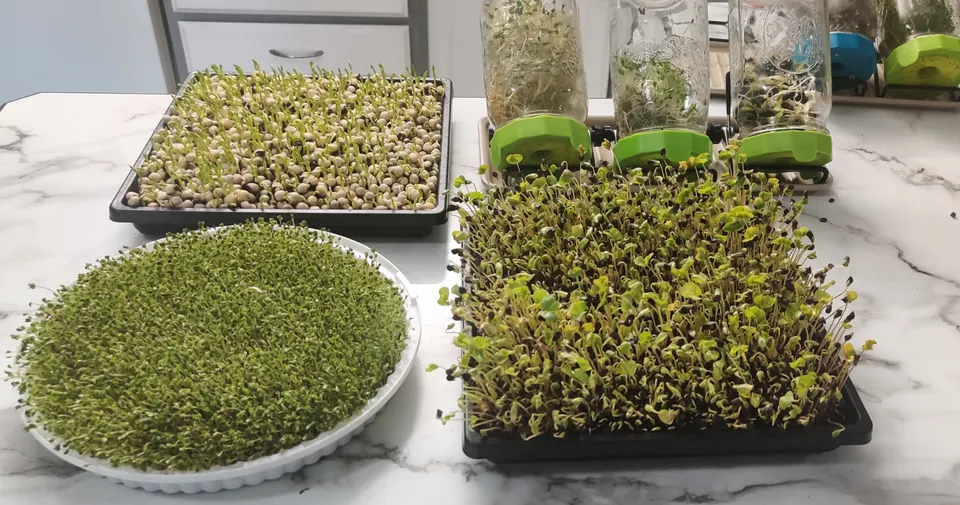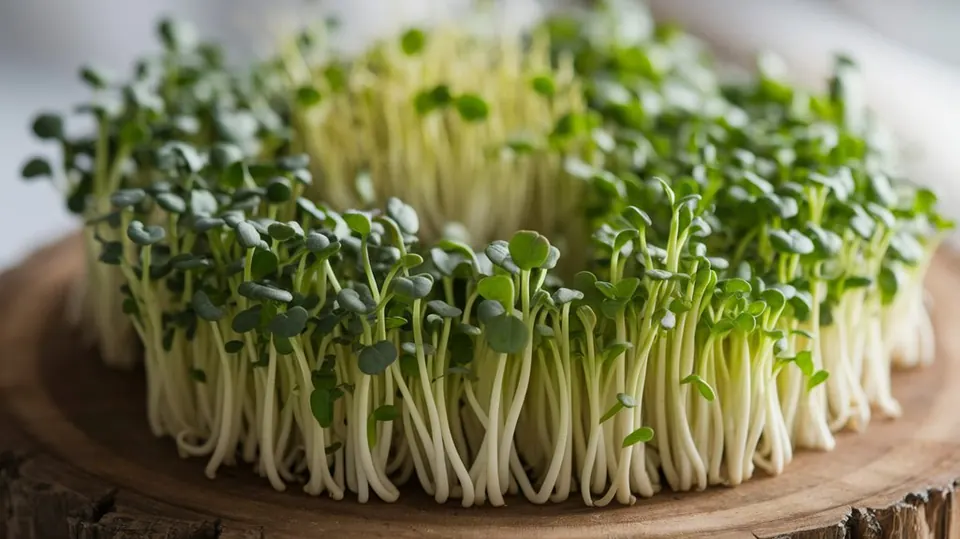
Short answer: the main types of sprouts are leafy small seeds (alfalfa, clover, broccoli: mild and fresh), beans and legumes (mung, lentil, chickpea, pea: crunchy and earthy, good cooked), spicy brassicas (radish, mustard, cress: peppery), grains and seeds (wheat, quinoa, buckwheat, sunflower: sweet or nutty), and aromatic seeds (fenugreek: bitter, curry-like).
Types of sprouts by family
| Type | Examples | Flavour | Ready in |
|---|---|---|---|
| Leafy small seeds | Alfalfa, red clover, broccoli, kale | Mild, fresh, grassy | 4–5 days |
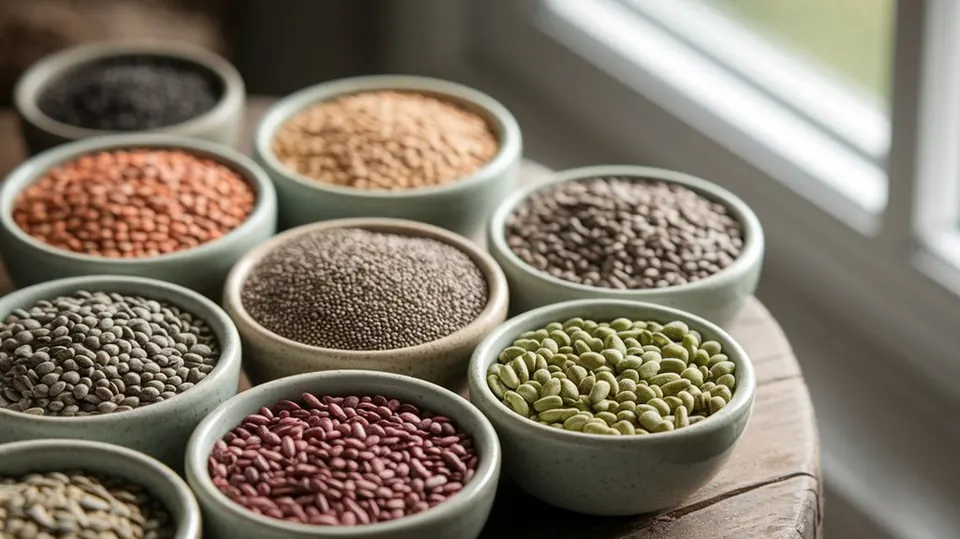
| Beans and legumes | Mung beans, lentils, chickpeas, peas, adzuki | Crunchy, earthy, sweet | 2–4 days |
| Spicy brassicas | Radish, mustard, cress, arugula | Peppery, hot | 4–5 days |
| Grains | Wheat, barley, oats, quinoa, buckwheat | Sweet, nutty | 1–3 days |
| Seeds and nuts | Sunflower, pumpkin, sesame | Nutty, buttery | 1–2 days |
| Aromatic | Fenugreek, fennel | Bitter, spicy, licorice | 3–5 days |
| Gel seeds | Chia, basil, flax | Mild, nutty, herbal | 4–7 days on a plate |
Mild sprouts
Alfalfa is the classic sandwich sprout: soft, grassy and mild. Red clover looks and tastes a lot like alfalfa. Broccoli sprouts are slightly peppery, a little like radish's gentle cousin. Mung bean sprouts are crisp and juicy with almost no flavour of their own, which is why they suit stir-fries.
Spicy sprouts
Radish is the hot one, with a real bite. Mustard sprouts range from tangy to wasabi-hot. Cress tastes sharp and peppery. Mix a little of one into milder sprouts to add some kick. Sprouting.com sells a Sandwich Booster mix that blends mild and spicy seeds.
Earthy and crunchy sprouts
Lentil sprouts are crisp and earthy, great in salads and curries. Chickpea sprouts are nutty and firm. Peas taste sweet and fresh. These are the best types of sprouts for cooking. Try the Crunchy Bean Mix for several at once.
Sweet and nutty sprouts
Sprouted wheat and other grains taste sweet and soft. Quinoa sprouts are mild and nutty once rinsed well. Sunflower sprouts (hulled) are buttery and nutty. Grains are only sprouted briefly, often for 1 to 2 days, and are popular for sprouted bread and sprouted flour.
Bitter and aromatic sprouts
Fenugreek sprouts are bitter with a curry-like smell. Cooks in India use them in curries and flatbreads such as sprouted methi paratha. Harvest them young to keep the bitterness down.
How seed choice changes taste
- Harvest time: older sprouts usually taste stronger and more bitter.
- Light: leafy sprouts given light on the last day taste greener.
- Variety: red and purple types of the same plant, like red radish vs daikon, can taste different.
- Freshness: fresh seed sprouts evenly and tastes cleaner.
Which types of sprouts to try first
- Mung beans: fast, forgiving, great cooked.
- Alfalfa: the easiest leafy sprout.
- Lentils: crunchy in 2 to 3 days.
- Broccoli: mild, with the sulforaphane story.
- Radish: when you want some heat.
Raw sprouts carry a food-safety risk. The FDA says higher-risk groups should not eat them raw, and Health Canada advises everyone to cook them.12 See every seed in the seed library or shop sprouting seeds.
Frequently asked questions
What are the most common types of sprouts?
Alfalfa, mung bean, broccoli, radish, clover, lentil and chickpea sprouts are the most common. Mung bean sprouts are the ones sold as 'bean sprouts' in most stores.
Which sprouts taste the mildest?
Alfalfa, clover and mung bean sprouts are the mildest. They're crisp and fresh, which makes them easy to add to almost anything.
Which sprouts are spicy?
Radish, mustard, arugula and cress sprouts all have a peppery bite. Radish is the most popular spicy sprout.
Which sprouts are best for cooking?
Bean and legume sprouts like mung beans, lentils, chickpeas, soybeans and peas hold up well in stir-fries, soups and curries. Cooking them also lowers the food-safety risk.

Written by Michael
A passionate sprouting professional sharing practical tips for growing sprouts and microgreens at home. More about Michael