In this lesson:
- What a sprout actually is
- The four things every seed needs
- The five ground rules that this whole course is built on
- What the next 11 lessons cover
What is a sprout?
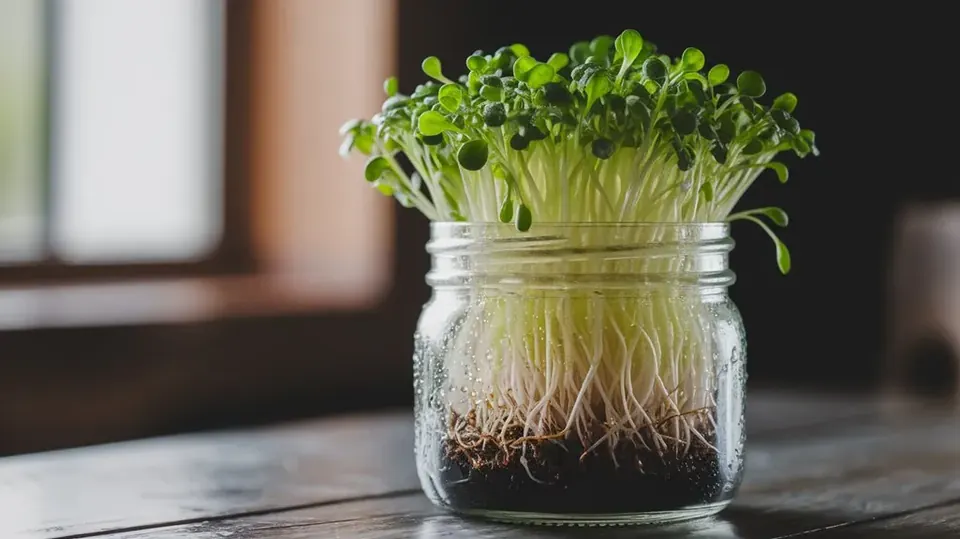
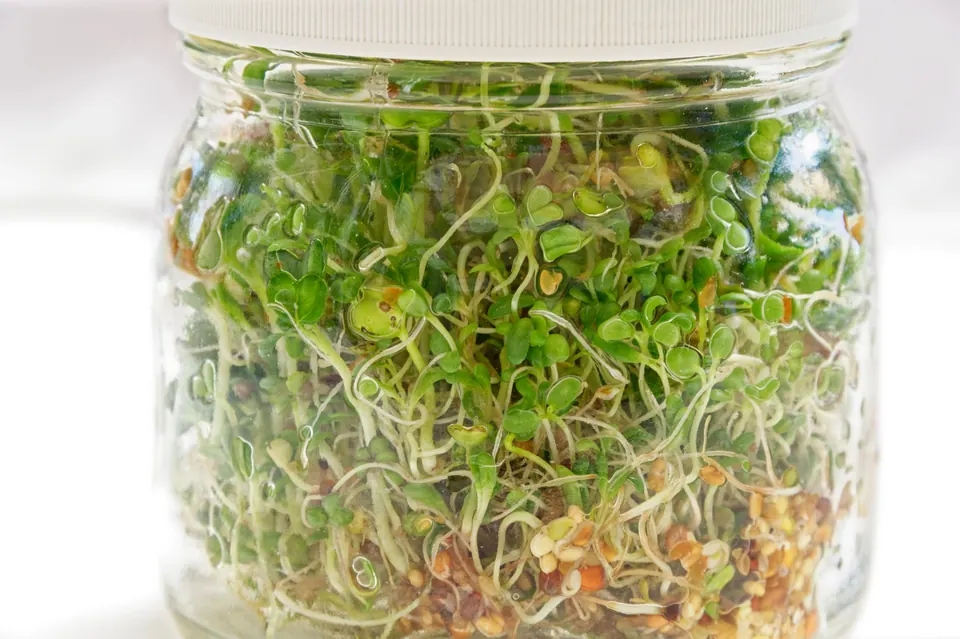
A sprout is a seed that has just started to grow. Beans, lentils, grains and many small vegetable seeds all do this.
Inside every seed is a tiny plant and a packed lunch. The seed sits dry and waiting. When it gets water, warmth and air, it wakes up. The shell splits, a small root (the "tail") pushes out, and a shoot follows. That is germination, and that moment is the sprout.
You do not need soil. You do not need light. The seed carries its own food for the first few days.
The four things a seed needs
- Water. Soaking starts the process. Regular rinsing keeps it going.
- Warmth. Most seeds sprout best between 65 and 75°F (18 to 24°C).
- Air. Seeds breathe. Sitting in standing water suffocates them and encourages bacteria.
- Time. Beans and lentils take 2 to 3 days. Small seeds like broccoli and alfalfa take 4 to 5.
That's it. Everything in this course is a way of giving seeds those four things while keeping bacteria out of the picture.
Why sprouting needs more care than other kitchen projects
Here is the honest part. The conditions that make seeds sprout (warm, wet, full of nutrients) are also the conditions bacteria love. A sprouting jar is a very good place for Salmonella, E. coli and Listeria to multiply, if they were there to begin with.
Sprouts are healthy, tasty and cheap. They are also one of the few foods that health agencies single out for caution. Health Canada advises avoiding raw or undercooked sprouts.1 The US FDA advises that young children, older adults, pregnant people and people with weakened immune systems should not eat raw or lightly cooked sprouts.2
That's why this course is different from many you'll find. We spend real time on seed sourcing (Lesson 3), food safety (Lesson 4) and troubleshooting (Lessons 8 and 9). And throughout, we show you how to cook your sprouts.
The 5 ground rules
Every lesson comes back to these.
Rule 1: Use seed meant for sprouting
Contamination often starts with the seed. Garden seed packets may be treated and are not handled as food. Lesson 3 covers this in full.
Rule 2: Start clean, every batch
Wash the jar and lid in hot soapy water before every batch. Never top up an old batch with new seed.
Rule 3: Keep it cool, damp and drained
Rinse twice a day with cool water. Drain completely. Keep the jar out of direct sun.
Rule 4: Chill and use quickly
Finished sprouts go into the fridge, dry, in a covered container. Use them within a few days.
Rule 5: When in doubt, throw it out
Seed costs pennies. A bad stomach costs far more. If a batch smells sour, musty or rotten, or feels slimy, it goes in the trash. Cooking it does not make it safe.
Our approach: cook your sprouts
You will learn to grow both bean sprouts (lentils, mung beans, chickpeas) and small-seed sprouts (broccoli, radish, alfalfa, clover). For every one of them, I will show you how to cook them, and I recommend you do.
If you choose to eat raw sprouts as a healthy adult, that is your decision to make with the facts in front of you. Lesson 4 gives you those facts. Please do not serve raw sprouts to anyone in a higher-risk group.
This course is for education. It isn't medical advice. If you have a health condition, ask your doctor or dietitian before adding sprouts to your diet.
The 12 lessons
Do this now
- Read Lesson 2 and gather your gear.
- Look at the Sprouting Calendar to see when seeds are ready.
- Optional: browse the Seed Library and pick three seeds you'd like to try.
Key takeaways
- A sprout is a seed that has just started to grow. It needs water, warmth, air and time.
- The same conditions that grow sprouts also grow bacteria, so care matters.
- Five rules: sprouting seed, clean jar, cool and drained, chilled and quick, and throw it out if in doubt.
- Cook your sprouts. It's the best way to lower your risk.

Written by Michael
A passionate sprouting professional sharing practical tips for growing sprouts and microgreens at home. More about Michael